School holidays can be a joy and a challenge. Here’s how to make room for more connection, creativity and real-world fun, without trying to create a perfectly screen-free break.
School holidays are almost here.
The routines loosen. Bedtimes get later. There are slow mornings, playdates, road trips, days at home and the inevitable:
“Muuuum, I’m bored.”
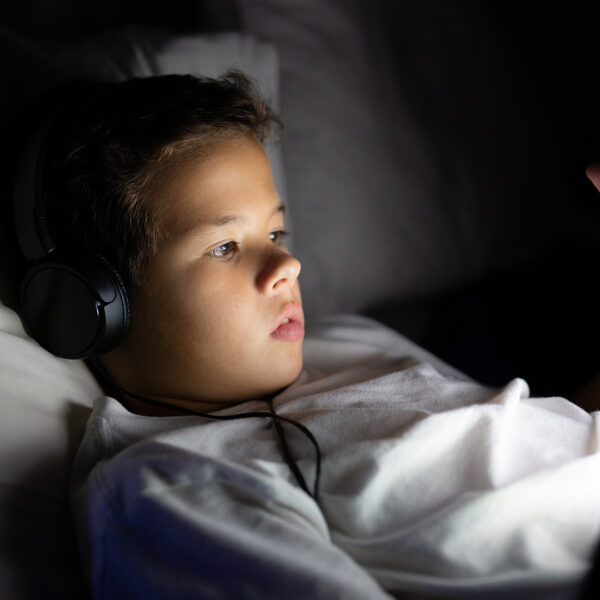
And when there’s nothing else happening, screens have a very convenient way of filling the gap.
But a low-tech school holiday doesn’t have to mean banning screens. And it definitely doesn’t mean planning an elaborate activity for every hour of every day.
At Screen Sanity, we’re much more interested in helping families use technology with intention, rather than by default.
With a little planning before the holidays begin, we can make more room for the things we want our kids to experience: connection, creativity, nature, responsibility, independence, and intentionally chosen screen time too.
Here are a few simple ways to get started.
1. Start with what you want MORE of
Before deciding how much screen time your kids can have these holidays, try asking a different question:
-
What do we want more of?
- More time outside?
- More friends around?
- More family adventures?
- More slow mornings?
- More making, building and creating?
- More time together?
Ask your kids too. Sit down before the holidays and let everyone choose a few things they’d love to do.
It changes the conversation from “How do we get the kids off screens?” to “What do we want to make room for instead?”
That’s a much more hopeful place to start.
2. Make a holiday bucket list together
You don’t need two weeks of expensive outings to create a memorable holiday.
Some of the simplest ideas can be the best ones.
Have a family recipe night. Make a neighbourhood scavenger hunt. Build an obstacle course. Go for a bike ride. Visit the library. Have a picnic in a park you’ve never visited. Build an enormous LEGO world. Start a mini garden. Make a family time capsule. Pull out every board game in the cupboard and see if you can play them all.
The important part is letting your kids contribute their ideas too.
Our School Holidays Kit includes a printable Holiday Bucket List designed for families to fill in together, as well as a 14-day holiday calendar to help kids see what’s coming up and take some ownership of their break.
And when you hear “There’s nothing to do!”?
Point them towards the list.
3. Don’t be afraid of boredom
This one can be surprisingly difficult. When our kids tell us they’re bored, our instinct is often to fix it.
We suggest an activity. Find an outing. Hand them something to do. Or eventually… hand them a screen.
But boredom doesn’t always need fixing.
Sometimes boredom is simply the uncomfortable little space before creativity begins.
The cardboard box becomes a shop. Someone pulls out the craft supplies. A cubby gets built. The neighbours appear. A game gets invented that makes absolutely no sense to adults but somehow lasts for three hours.
Leave some blank space in the holidays.
You don’t need to entertain your kids every minute of the day.
4. Decide how screens will fit into the holidays
A low-tech holiday doesn’t mean a no-tech holiday.
Gaming, movies, favourite shows and connecting with friends online can all be part of a great school break.
The aim is simply to decide where screens fit, rather than letting them automatically fill every empty moment.
Before the holidays begin, talk together about what that might look like for your family.
Maybe gaming happens in the afternoon. Maybe mornings stay screen-free. Maybe you choose a few family movie nights. You could even make a list of shows and movies everyone wants to watch so you spend less time endlessly scrolling for something to put on.
And rather than focusing only on how many minutes your child spends gaming, look at how it fits into the bigger picture.
Are they still getting outside? Seeing friends? Sleeping well? Doing other things they enjoy? Can they transition away from the game when it’s time to stop?
The School Holidays Kit includes a Gaming and Tech Conversations guide to help families navigate these decisions together.
Screens don’t have to disappear for kids to have a great holiday. They just don’t need to become the whole holiday.
5. Give kids something real to do
Not every school holiday activity needs to be designed specifically for children. Sometimes being part of ordinary family life is exactly what kids need.
- Let them choose ingredients at the markets and help plan dinner.
- Water the garden.
- Set the table.
- Bake something.
- Help wash the car.
- Plan a picnic.
- Choose a new park to explore.
- Take responsibility for one family meal.
These ordinary experiences give kids opportunities to contribute, solve problems and practise independence.
One of our favourite ideas from the School Holidays Kit is surprisingly simple: print your map instead of automatically using GPS.
Let the kids help work out the route and take turns navigating. It’s a small way to build independence, keep everyone off their phones and put their brains to work.
6. Let nature do some of the work
You don’t need a ticketed attraction every day.
- Go outside.
- Find a creek.
- Take the bikes somewhere new.
- Have breakfast outdoors.
- Walk somewhere instead of driving.
- Learn the names of the trees in your neighbourhood.
- Plant some seeds and track their growth.
- Pack dinner and watch the sunset.
- Take a picnic to a park you’ve never visited before.
- Or simply meet some friends at the park and let the kids work out what happens next.
The School Holidays Kit includes plenty of inspiration for getting outdoors, along with Brisbane-specific ideas including Roma Street Parkland, Walkabout Creek Discovery Centre, Boondall Wetlands, local pump tracks, splash parks and pools.
You don’t necessarily need to create an “activity”. Sometimes you just need to get everyone out the front door.
7. Look at what’s already happening in your community
Before paying for another holiday program, check what’s already happening around you.
Your local library, council, museum, gallery, community centre and park are great places to start.
For Brisbane families, our School Holidays Kit highlights places including Museum of Brisbane, QAGOMA Children’s Art Centre and Brisbane City Libraries, alongside outdoor and community activities.
And wherever you are in Australia, your local library is worth checking.
You might find storytimes, craft workshops, LEGO clubs, performances, maker activities and holiday challenges, often free or very low cost.
It doesn’t need to be big or expensive to become the thing your kids talk about when school goes back.
8. Give older kids a little more freedom
School holidays aren’t only an opportunity to find things for our kids to do.
They can also be an opportunity to let them do a little more for themselves.
Could they ride to a friend’s house? Walk somewhere nearby Spend some time outside without an adult directing the activity? Have a clear “be home by this time” expectation?
As kids get older, giving them small amounts of age-appropriate freedom helps them practise independence and builds trust.
Our School Holidays Kit encourages families to think about ways children can build independence and resilience in the real world, without assuming a smartphone needs to be the gateway to that freedom.
And finally: don’t try to create the perfect holiday
Some days will be adventures.
Some will be playdates.
Some will involve hours outside.
Some will be pyjamas until lunchtime.
There’ll probably be a movie afternoon because everyone is exhausted.
And there might be a rainy day when the kids play far more Minecraft than you intended.
That’s okay.
Digital wellbeing isn’t about getting every day right.
A low-tech holiday isn’t about doing more, either.
It’s about being present enough to notice when technology is starting to fill every gap, and making a little room for something else.
- Connection.
- Creativity.
- Nature.
- Friendships.
- Responsibility.
- Rest.
- Boredom.
- Play.
Childhood.
When screens come out, they can be used to learn, connect, create and relax.
And when they go away, there’s a whole world waiting.
Make the holidays a little easier
We’ve put these ideas, and plenty more, into our FREE School Holidays Kit: How to Have a Low-Tech Break.
Inside you’ll find:
- Holiday Bucket List
- 14-Day Holiday Calendar
- Screen-free activity inspiration
- Gaming & tech conversation guide
- Local Brisbane activity ideas
- Ideas for encouraging independence
- More practical tools for navigating technology during the break
A little planning now can mean less negotiating, less default scrolling and more room for the good stuff once the holidays begin.
Download your FREE School Holidays Kit → https://screensanity.org.au/resources/holiday-survival-toolkit/
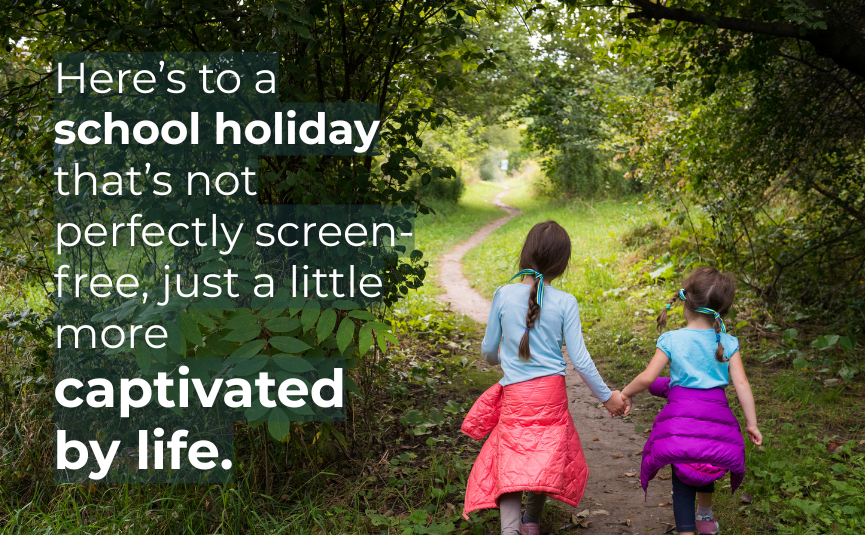
Here’s to a school holiday that’s not perfectly screen-free, just a little more captivated by life. 💛